

Cochrane South Africa (CSA), based at the South African Medical Research Council (SAMRC), participated in the WHO and SAMRC National Dialogue on Strengthening the Clinical Trials Ecosystem, held in Cape Town on 14 and 15 July 2026. The meeting brought together researchers, regulators, policymakers, funders, ethics committees, and international partners to explore opportunities for strengthening South Africa's clinical trials ecosystem and advancing the implementation of the WHO Global Action Plan for Clinical Trial Ecosystems.
Cochrane South Africa was represented by Prof Mark Engel (Director), Dr Duduzile Ndwandwe (Senior Specialist Scientist), Dr Lindi Mathebula (Project Manager), Ameer Hohlfeld (Senior Scientist), and Ebrahim Samodien (Research Manager), reflecting the unit's multidisciplinary contribution to strengthening clinical trial governance, research transparency, evidence synthesis, knowledge translation and health systems strengthening.
As part of the programme, Dr Duduzile Ndwandwe delivered the presentation on Clinical Trial Registration and Reporting, highlighting the pivotal role of the South African National Clinical Trials Register (SANCTR) and the Pan African Clinical Trials Registry (PACTR) in promoting research transparency, strengthening governance, supporting regulatory oversight, and enabling evidence-informed decision-making. The presentation demonstrated how high-quality clinical trial registries are evolving beyond compliance tools to become strategic intelligence platforms that support national health priorities, pandemic preparedness, and research coordination across Africa.
Two Registries. One Shared Goal. Greater Research Transparency.
Dr Ndwandwe highlighted the complementary roles of the South African National Clinical Trials Register (SANCTR) and the Pan African Clinical Trials Registry (PACTR).
SANCTR is South Africa's national clinical trial registry and is mandated through the South African Good Clinical Practice (SA GCP) Guidelines. PACTR, meanwhile, is Africa's only WHO Primary Registry, contributing African clinical trial data to the WHO International Clinical Trials Registry Platform (ICTRP), ensuring that African research is visible within the global research landscape.
Together, these registries strengthen the integrity of the clinical research ecosystem by improving transparency, reducing unnecessary duplication of studies, minimising reporting bias, supporting evidence synthesis, and enabling researchers, policymakers and funders to identify research gaps and opportunities for collaboration.
"Clinical trial registries are no longer simply repositories of information. They have become strategic infrastructure that supports research governance, pandemic preparedness and evidence informed health policy," said Dr Ndwandwe.
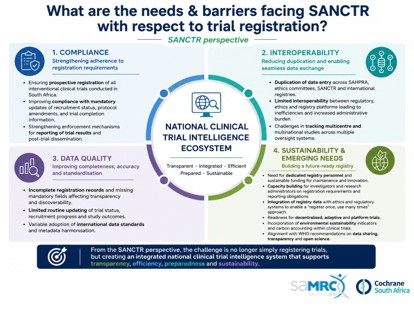
Strengthening Quality Through Better Integration
The presentation showcased ongoing efforts to strengthen registry quality, interoperability and compliance. Both SANCTR and PACTR align with WHO international data standards, while SANCTR captures additional information relevant to the South African research environment.
A significant milestone has been the collaboration with the South African Health Products Regulatory Authority (SAHPRA), which now requires investigators to provide six-monthly updates throughout the lifecycle of registered clinical trials. This requirement helps ensure that registry records remain accurate, current and reflective of ongoing protocol changes, recruitment status and trial progress.
Turning Data into Action
One of the highlights shared during the session was the launch of the SANCTR and PACTR Clinical Trials Dashboard on International Clinical Trials Day.
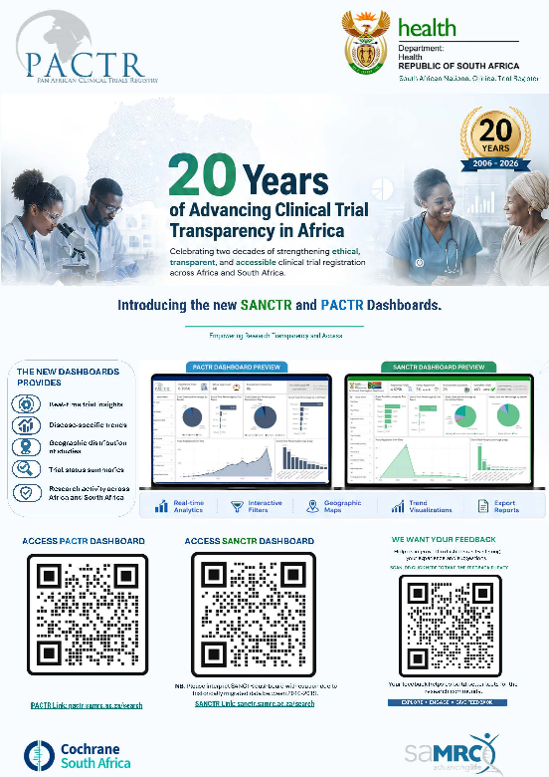
The interactive dashboard provides near-real-time insights into registered clinical trials, allowing researchers, policymakers, funders and the public to explore the clinical trials landscape through dynamic visualisations and analytics. By transforming registry data into accessible intelligence, the dashboard strengthens transparency, supports strategic planning and promotes greater public accountability.
Challenges That Require Collective Action
Despite substantial progress, Dr Ndwandwe acknowledged several persistent challenges affecting clinical trial registration both nationally and globally.
These include:
• duplicate registrations across multiple platforms
• delayed reporting of trial results
• sustainability of registry operations
• improving compliance with reporting requirements
• advancing interoperability between global registry platforms.
She also highlighted ongoing collaboration with the WHO International Clinical Trials Registry Platform (ICTRP) to develop more structured, harmonised and interoperable approaches for reporting clinical trial results internationally.
Building the Future of Clinical Research
The dialogue reinforced that strong clinical trial registries are fundamental to an efficient, transparent and equitable research ecosystem. They support not only research governance and accountability but also strengthen preparedness for future public health emergencies by making research activities more visible, coordinated and accessible.
The discussions closely aligned with broader national priorities to improve clinical trial governance, enhance coordination across stakeholders and position South Africa as a leader in high-quality, ethical and transparent clinical research.
Cochrane South Africa remains committed to strengthening clinical trial transparency through SANCTR and PACTR, advancing evidence-informed healthcare, and supporting research systems that generate trustworthy evidence to improve health outcomes across South Africa and the African continent.
Click to explore the SANCTR and PACTR Clinical Trials Dashboards