
Cochrane South Africa staff recently participated in the 18th World Congress on Public Health (WCPH) in Cape Town, joining thousands of public health leaders, researchers, practitioners and advocates from around the world to advance discussions on some of the most pressing health challenges facing societies today.
Under the theme “Health Without Borders: Equity, Inclusion and Sustainability,” the Congress brought together experts committed to strengthening health systems, reducing inequities and promoting evidence-informed decision-making. Significantly, this was the first time that the World Congress on Public Health was hosted in Southern Africa, providing a landmark platform for African voices, experiences and evidence to contribute to global public health dialogue.
For Cochrane South Africa, the Congress represented an opportunity not only to share research findings, but also to demonstrate how evidence can be translated into forms that support policy, practice and community engagement. Through oral presentations, poster sessions and dissemination activities, staff showcased work spanning vaccine confidence, health policy, cancer epidemiology and brain health.
Advancing Evidence for Equity and Public Health Impact
Dr Sara Cooper delivered an oral presentation on a global Cochrane qualitative evidence synthesis exploring caregivers’ and adolescents’ views and experiences of HPV vaccination. Drawing on studies from diverse settings around the world, she presented evidence demonstrating that vaccine acceptance and hesitancy are influenced by a complex interplay of social norms, trust in institutions, gender dynamics, programme delivery approaches and broader societal factors. The findings highlighted the importance of moving beyond information-focused interventions to address the social and structural contexts that shape vaccine decision-making.
Beyond presenting the research, Dr Cooper also participated in research translation and dissemination activities linked to the Congress. As part of Cochrane South Africa’s commitment to making evidence accessible to broader audiences, she shared a Plain Language Summary of the review, helping communicate key findings in a clear and engaging way for healthcare professionals, community stakeholders, policymakers and the public. This work underscored the importance of ensuring that scientific evidence reaches beyond academic audiences and supports informed health decisions in real-world settings.
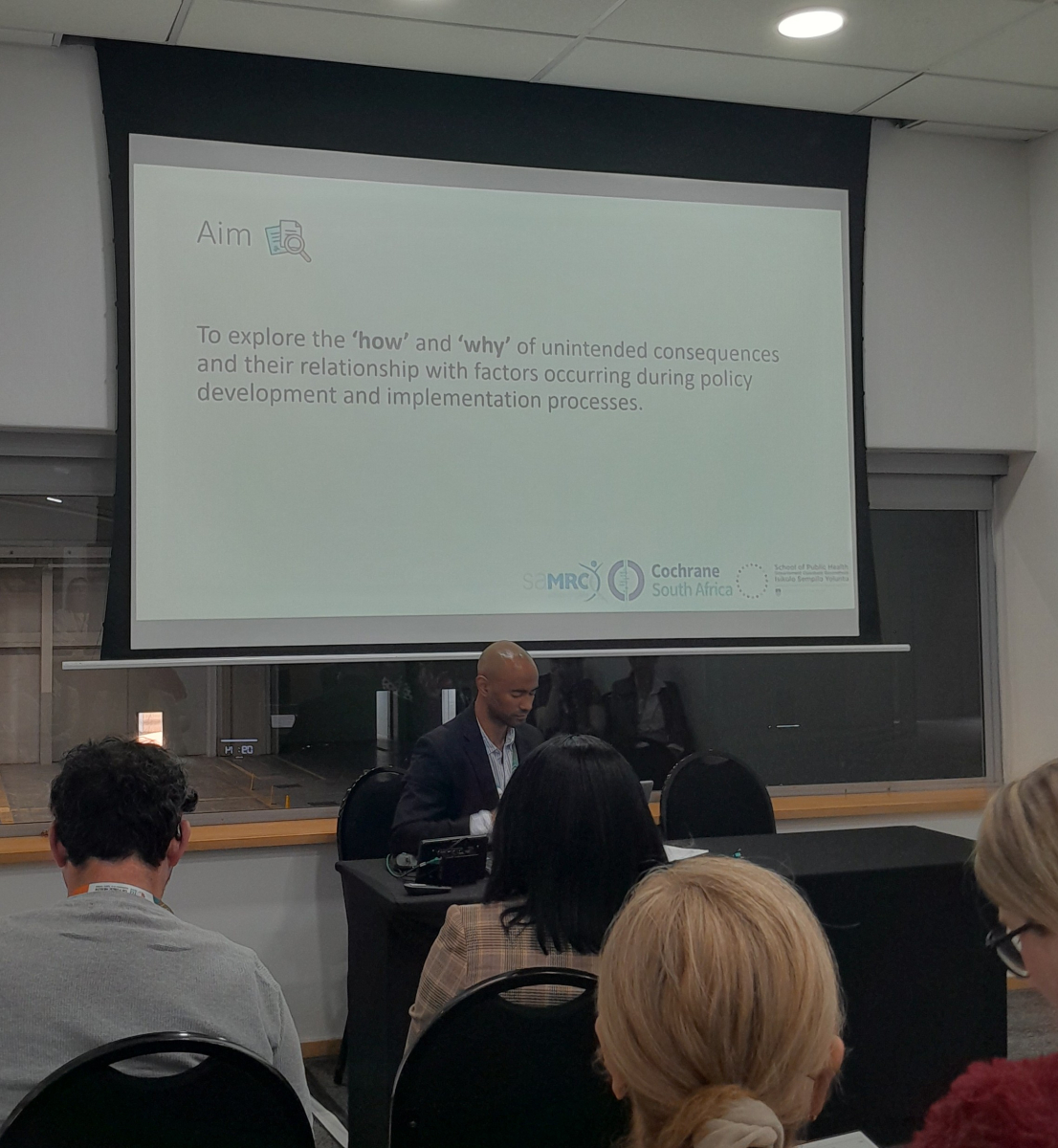 Mr Dane Witten, affiliate Scientist at CSA, presented research examining policy implementation challenges within South Africa’s health system. Using the Occupation-Specific Dispensation policy for public-sector nurses as a case study, the work explored how policy processes, stakeholder engagement and implementation dynamics can influence health workforce outcomes. The presentation contributed valuable insights into the importance of inclusive policy development and highlighted considerations for strengthening future health policy implementation efforts.
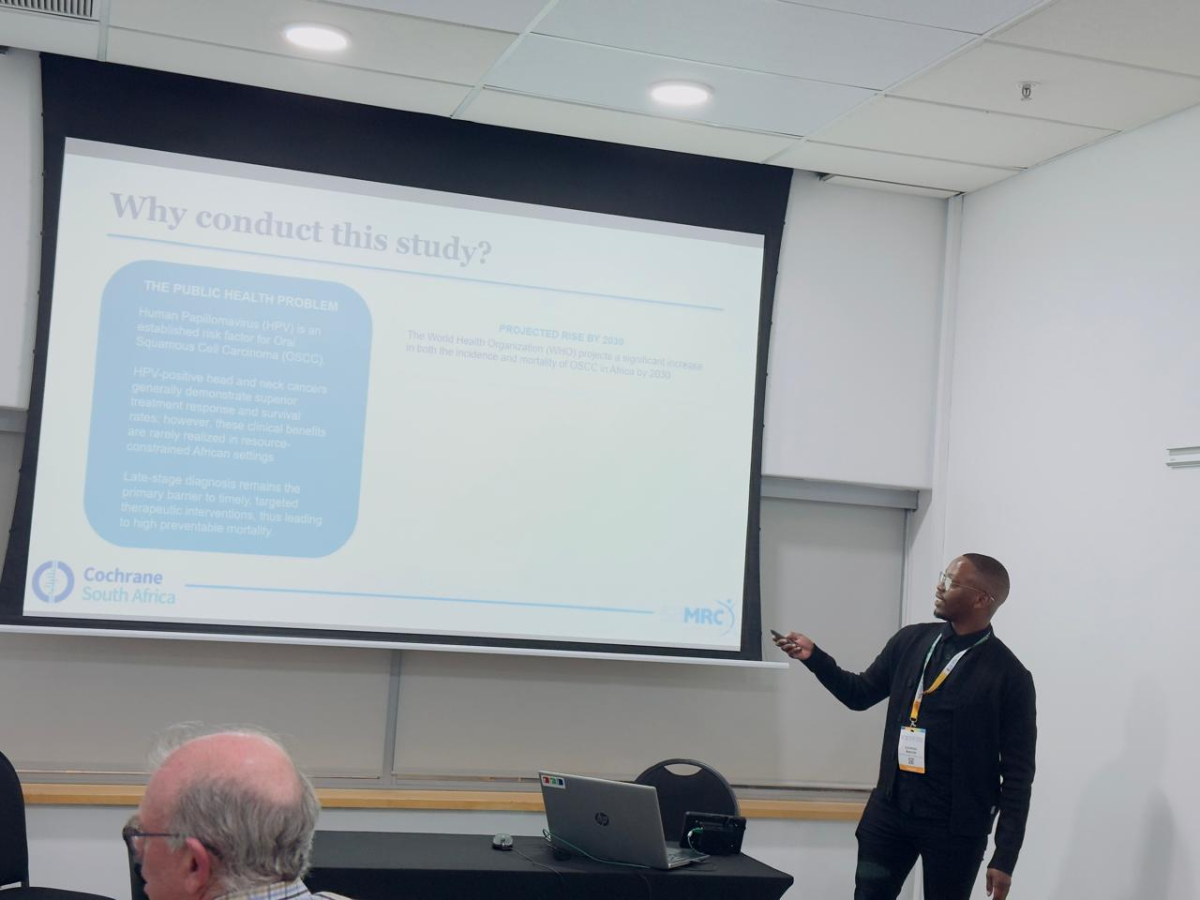 Mr Lorenzo Bennie shared findings from his systematic review and meta-analysis investigating the prevalence and distribution of HPV-associated oral squamous cell carcinoma across Africa. The study addressed important evidence gaps relating to HPV-associated cancers on the continent and explored variations in disease burden, diagnostic approaches and reporting across different African settings. By bringing together evidence from across the continent, the research contributed to a growing understanding of HPV-related cancers in Africa and highlighted areas where further research and strengthening of surveillance are needed.
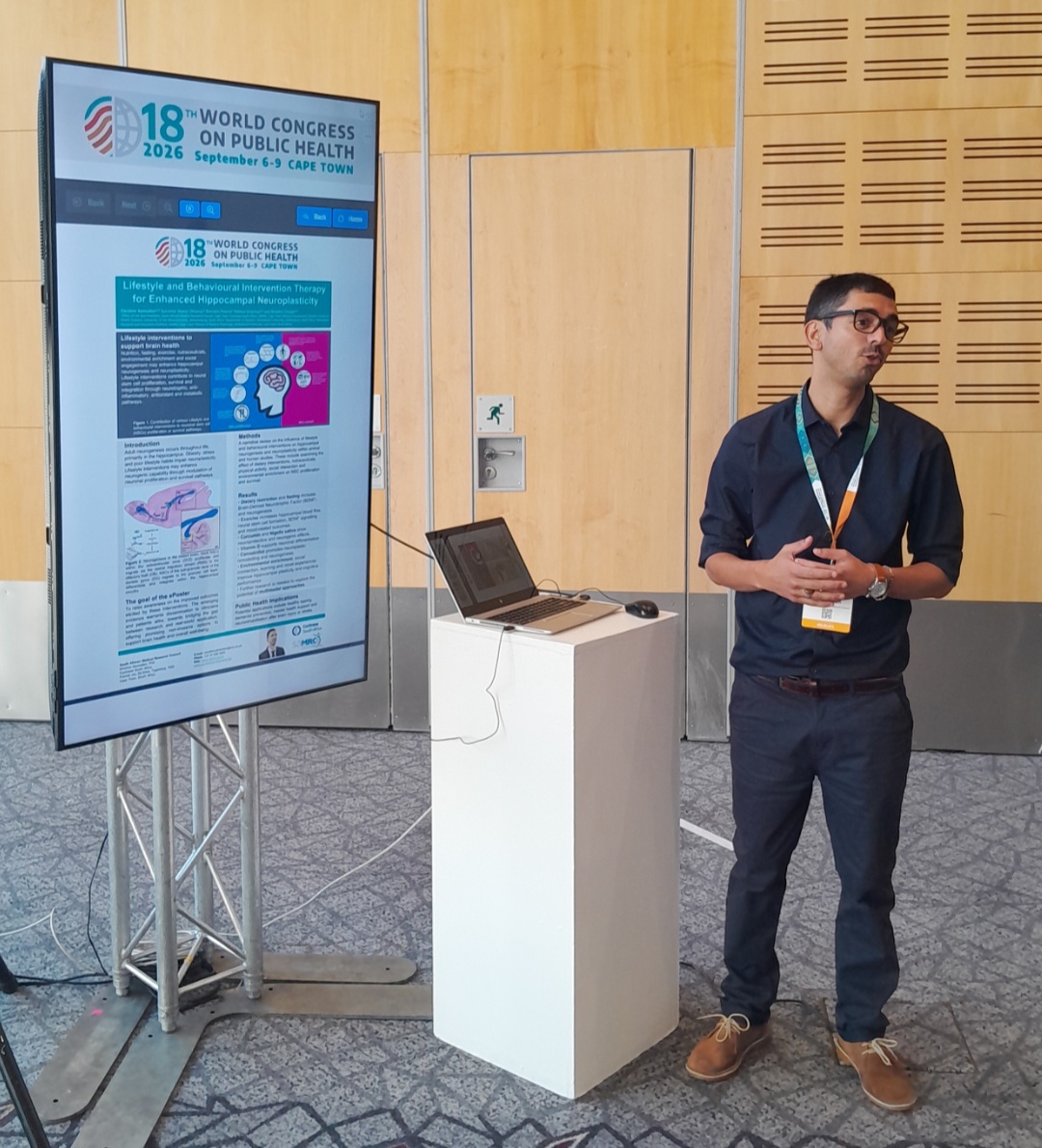 Dr Ebrahim Samodien presented on the role of lifestyle and behavioural interventions in enhancing hippocampal neuroplasticity. Based on his review exploring evidence related to physical activity, nutrition, dietary restriction, nutraceuticals, environmental enrichment and social engagement, he highlighted their potential role in supporting healthy brain ageing, mental well-being and neurorehabilitation. By considering non-pharmacological approaches that may enhance neuroplasticity, the work contributed to broader discussions on prevention, healthy living and strategies to support brain health across the lifespan.
From Evidence Generation to Evidence Use
The Congress reinforced the growing recognition that producing high-quality research is only one step in improving health outcomes. Equally important is ensuring that evidence is communicated effectively, understood by diverse audiences and used to inform decisions.
Throughout the Congress, Cochrane South Africa highlighted its ongoing commitment to knowledge translation by promoting accessible evidence products and engaging with researchers, practitioners, policymakers and public health advocates. These interactions created opportunities to discuss how evidence synthesis can support health systems strengthening, improve programme implementation and contribute to more equitable health outcomes.
Building Global Networks from Africa
Beyond the scientific programme, the Congress offered valuable opportunities to connect with public health experts and institutions from across the globe. Cochrane South Africa staff engaged in discussions on shared public health challenges, emerging research priorities and opportunities for future collaboration in evidence synthesis, implementation science and knowledge translation.
Being hosted in Cape Town, the Congress provided a unique opportunity for African researchers to engage directly with the international public health community while showcasing the depth and diversity of research being undertaken across the continent. It also reinforced the importance of ensuring that global health conversations are informed by perspectives and evidence from low- and middle-income settings.